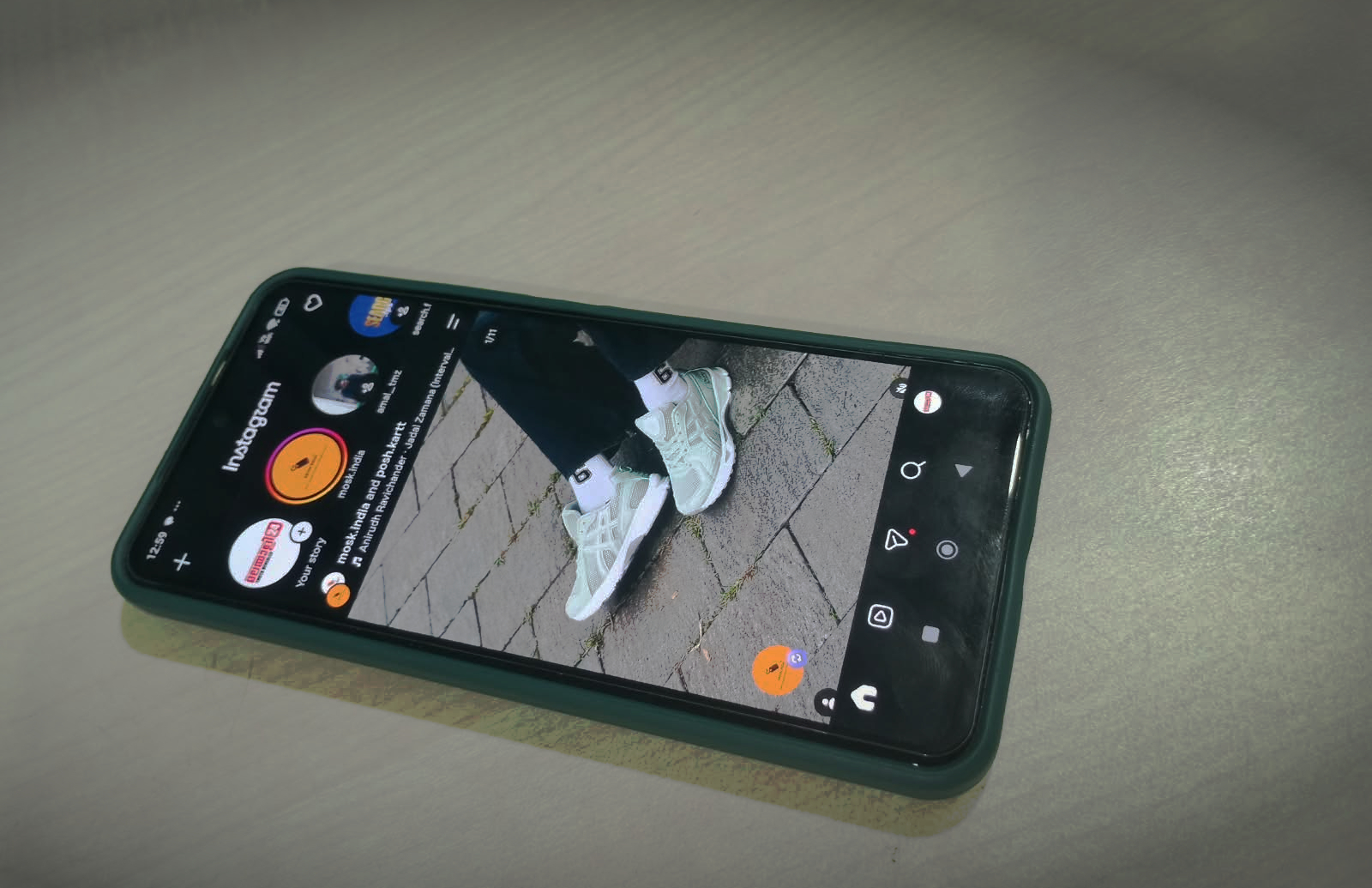
Short videos are everywhere these days. Open Instagram for a few minutes and you'll probably end up watching several Reels without even realising how much time has passed. The same thing happens on YouTube Shorts and Facebook.
People watch them while travelling, during breaks, before going to sleep, and sometimes even when they have only a minute or two to spare.
For businesses, this creates an interesting opportunity. A video that explains a product, demonstrates how something works, or simply shares a useful idea can reach people who might never have visited the business's website or searched for its products.
But does that mean every business should start making short videos? Not necessarily.
It is worth understanding why this format is getting so much attention and, more importantly, how businesses can actually use it.
Short-form video is becoming a normal part of how Indians use social media
There is some interesting research behind this shift.
A Meta-commissioned study conducted by IPSOS in India surveyed more than 4,000 respondents across 23 cities, including metropolitan, Tier 2, Tier 3 and rural areas.
According to the study, 97% of surveyed users in India watch videos on Meta platforms daily. The figure was also quite similar between urban and rural audiences, with daily video engagement reported at 98% in urban areas and 94% in rural areas.
Another interesting finding is that 89% of surveyed Gen Z users engage with Reels daily. The study also found that 84% of Gen Z respondents and 73% of rural respondents discover new products and brands through Meta platforms.
Of course, these figures come from a Meta-commissioned study and describe the platforms and audiences covered by its research. They shouldn't be treated as a measurement of every Indian social media user. Still, the findings give us a useful idea of how video is becoming part of everyday content discovery.
For a small business, this matters because reaching an audience is no longer limited to people who already follow its account. A useful video can also be discovered by people who have never heard of the business before.
Reels, Shorts and other platforms: where should a business start?
There are several places where businesses can publish short-form videos. Instagram Reels and YouTube Shorts are two of the most familiar options, while Facebook also has a substantial audience for video content.
However, publishing the same video everywhere without considering the audience isn't always the best approach.
Instagram Reels can be useful for businesses that depend on visual presentation, product discovery, lifestyle content and creator partnerships. A clothing store, for example, could show different ways to style an outfit rather than simply posting a picture of the product.
YouTube Shorts can work well for quick explanations, demonstrations, tips and educational content. A software company might show a small feature in action, while a digital marketing agency could explain one common SEO mistake in less than a minute.
Facebook is still worth considering, particularly for businesses that serve local communities or have an existing audience there. It can also help businesses distribute videos through Pages and relevant groups, provided the content is appropriate for those communities.
The important thing is to understand where the intended audience spends time. There is little point in investing heavily in a platform simply because everyone else is doing it.
And one more thing worth mentioning for Indian businesses: TikTok should not be treated as a currently available domestic marketing channel in India. Businesses targeting audiences in other countries may have different platform choices, but local strategies need to reflect the platforms actually accessible to their intended customers.
Why are some short videos more interesting than others?
Have you ever watched a video about something you weren't even interested in initially, only because the first few seconds caught your attention?
That is one of the things that makes short-form video different. People are scrolling through a continuous stream of content, and they can move on almost immediately if something doesn't interest them.
This doesn't mean a business needs expensive equipment, professional actors or complicated editing to make a good video. Sometimes a simple demonstration recorded on a phone can explain something much better than a highly produced advertisement.
HubSpot's 2026 Social Media Marketing Report surveyed more than 1,100 social media professionals. One of its findings was that 77% of surveyed marketers believe authenticity is more important than production value on social media.
That is worth thinking about, especially for smaller businesses that cannot afford to produce elaborate videos every week.
For instance, a local restaurant could show how a particular dish is prepared, a fitness trainer could demonstrate a common exercise mistake, and an online store could record a quick product demonstration. None of these requires a major production budget.
What matters is whether the video gives the viewer a reason to keep watching.
A few practical things can help:
Get to the point instead of spending several seconds introducing the business.
Show the product or explain the topic early in the video.
Use captions so viewers can understand the message even when their sound is turned off.
Avoid adding unnecessary effects and transitions.
Give people something useful, interesting or entertaining rather than simply asking them to buy something.
It sounds straightforward, really, but many business videos still spend more time promoting the company than explaining why anyone should pay attention.
Views are useful, but they don't tell the whole story
One of the easiest mistakes in video marketing is judging performance entirely by the number of views.
A video with 50,000 views might look impressive, but what if most viewers leave after a couple of seconds? What if none of them visit the business profile, ask a question or show any interest in the product?
On the other hand, a video with fewer views might attract people who are genuinely interested in what the business offers.
So what should businesses measure?
Watch time and retention: These help indicate whether people are continuing to watch the video or leaving early. If viewers regularly leave within the first few seconds, the opening might need some work.
Shares and saves: These can be useful signals that people found the content worth sharing or returning to later. Educational videos, practical tips and interesting demonstrations can perform well in this area.
Comments and conversations: Look beyond the number of comments. Are people asking relevant questions? Are they discussing the product or sharing their own experiences?
Profile visits and website clicks: If the purpose of a video is to introduce a business to new customers, it is useful to know whether viewers take the next step.
Enquiries and sales: For businesses using video to generate leads or sales, these are particularly important. A high view count is not much help if the campaign isn't reaching the intended customers.
The right measurements depend on what the business wants to achieve. A video designed to introduce a new brand shouldn't necessarily be judged in exactly the same way as one intended to generate product enquiries.
Short-form video can influence product discovery and buying decisions
Video isn't only about entertainment. People also use it to learn about products, compare options and get a better idea of what they might be purchasing.
A product photograph can show what something looks like, but a video can demonstrate how it works. That difference can be quite important when someone is deciding whether a product is worth buying.
A 2026 Global Insights Report from DoubleVerify surveyed 22,000 consumers and 2,020 marketers globally.
It found that 26% of surveyed consumers use social media to research products, while 25% had purchased through social media in the previous year. The report also found that 38% of consumers globally said short-form video advertisements could encourage them to click or purchase. In the Asia-Pacific region, that figure was 47%.
These are global and regional survey findings, not a guarantee that a particular video will generate sales. But they do show why businesses are paying attention to video as part of the customer journey.
Consider an online store selling kitchen equipment. Instead of publishing another product image with a price, it could show the equipment being used, demonstrate a feature and answer a common question. Someone who was previously unfamiliar with the product might now have a better understanding of what it does.
The same idea applies to services. A business can explain its process, show examples of its work or answer questions that potential customers commonly ask.
How can smaller businesses build a practical video strategy?
Not every business needs to publish several videos every day. In fact, trying to produce too much content without a clear plan can become tiring quite quickly.
It is better to start with a manageable approach.
First, identify a few topics that your intended audience might actually care about. These could be common questions, product demonstrations, mistakes people make, useful tips or short explanations related to your industry.
Next, think about how those topics could be presented visually. A tutorial might work as a screen recording, while a product demonstration might be better recorded using a phone camera. You don't need to turn every topic into a complicated production.
It is also worth experimenting with different opening lines and video lengths. One topic might work better as a 20-second explanation, while another may need a little more time. Check the performance rather than assuming that one format works for everything.
Consistency matters, but that doesn't mean posting just for the sake of keeping an account active. A smaller number of useful videos can be more worthwhile than a constant stream of repetitive content.
And don't forget to make it easy for interested viewers to find the business afterwards. Keep profile information accurate, provide relevant links where the platform allows them, and respond to genuine questions.
Where does social media promotion fit into the picture?
Creating content is one part of social media marketing. Getting it in front of the right people is another.
Businesses may use a combination of organic publishing, paid advertising, creator collaborations and other promotional activities depending on their goals and budget. These approaches serve different purposes, so it is worth understanding what each one can realistically contribute.
For example, paid advertising can help a business target a particular audience, while organic publishing gives it an opportunity to build a consistent presence over time. Social media marketing services can also be part of a wider promotional plan, but they shouldn't be treated as a replacement for useful content or genuine customer interest.
When comparing social media services, businesses should pay attention to the service description, pricing, delivery conditions and provider support rather than choosing an option simply because it promises a large number of interactions at a very low price. Platforms have their own rules, and promotional methods should be considered with those rules in mind.
The same applies when using an SMM panel. A provider such as CheapproSMMPanel can be considered as one option when comparing social media marketing services, but businesses should still evaluate individual services carefully and keep their wider marketing objectives in mind.
Short-form video has made it easier for businesses to explain what they offer and introduce themselves to new audiences. The more useful question isn't how many videos a business can publish, but what those videos are actually helping it achieve.